
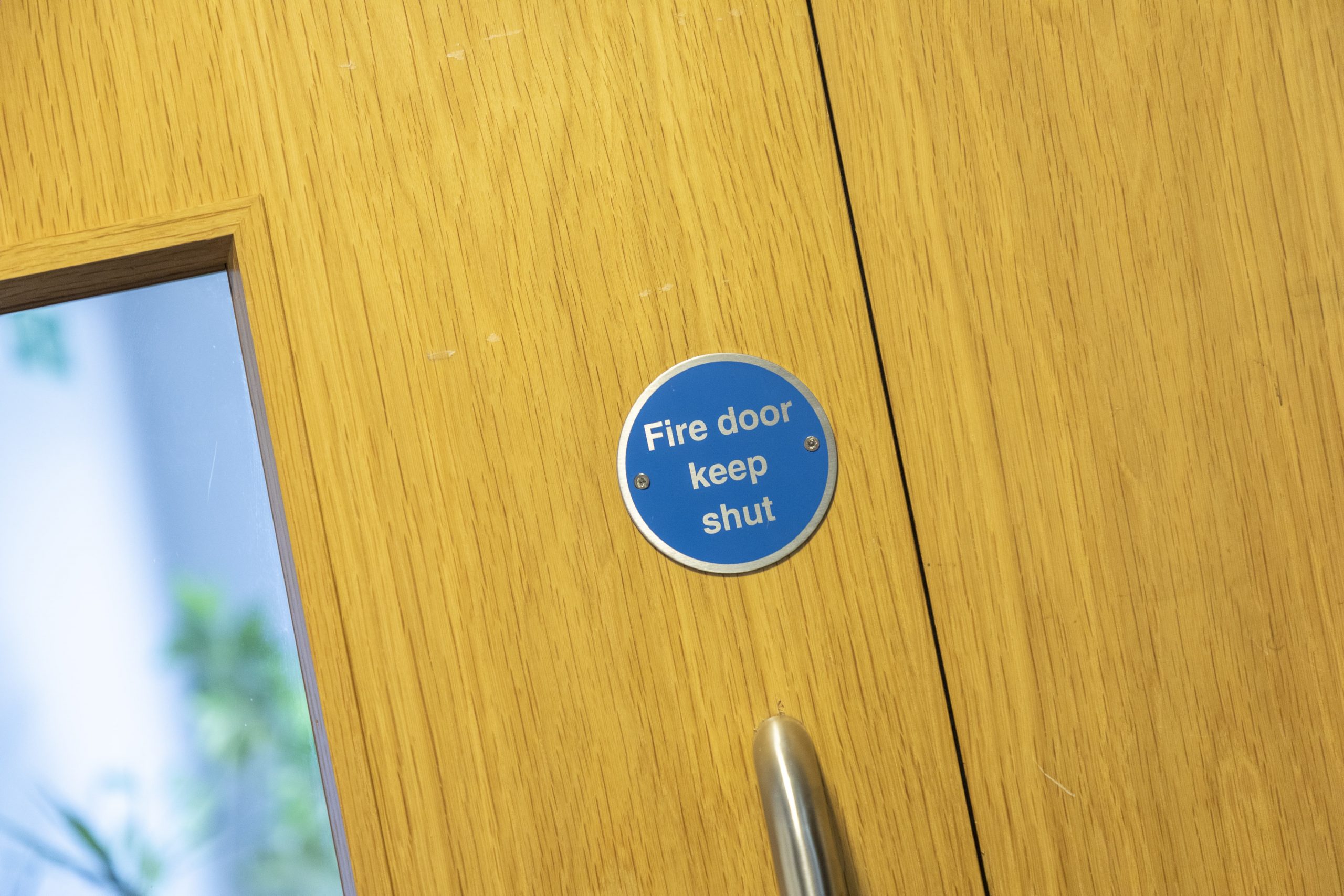
Fire Door Compliance Guide for Landlords and Managing Agents
Fire doors are a core part of a building’s passive fire protection. When they are correctly specified, installed and maintained, they help slow the spread of fire and smoke and protect escape routes. When they are not, they can fail quietly and only show the weakness when it matters most.
This guide is written for landlords, managing agents, facilities teams and anyone responsible for building safety across London and the South of England. It focuses on practical checks, common inspection failures, and how to keep fire doors compliant over time. It is provided for general information only and should not be treated as legal advice.
Who is responsible for fire door compliance
Responsibility varies by building type and who controls the premises, but in practice it usually sits with the person or organisation managing the building, the common parts, or the workplace. That can include landlords, managing agents and facilities teams, with competent contractors delivering inspections, maintenance and remedial works.
A simple rule is this: if you control the building or the common parts, you need a plan to ensure fire doors remain suitable, functional and maintained. Records matter because you may need to demonstrate inspections and corrective actions.
What a compliant fire door looks like in practice
A compliant fire door is not just a heavy door with a closer. It is a tested door set where leaf, frame, seals, hardware and installation all work together as one system. Below are the areas that most commonly determine whether a door passes or fails an inspection.
Quick idea: If something is missing, damaged, loose, or prevents the door from closing properly, it is likely to be flagged during inspection and should be addressed.
1) Door leaf and frame
- Leaf and frame should be appropriate for the door set and building use.
- Frame should be stable and securely fixed, with no movement.
- Damage, warping or moisture issues can affect performance.
2) Hinges and fixings
- Hinges should be suitable for the door weight and use.
- No missing screws, loose hinge leaves, or movement at the hinge side.
- Wear or cracking around the hinge area should be treated as a risk.
3) Smoke and intumescent seals
- Seals should be present, continuous and correctly seated.
- Missing, damaged, painted-over or poorly fitted seals are a common failure.
- Seals should not be torn, flattened or pulled away from the groove.
4) Door closer and self-closing action
- The door should self-close fully into the frame from an open position.
- Closing speed should be controlled and consistent, without slamming.
- The latch should engage reliably every time.
5) Gaps, alignment and operation
- Excessive or uneven gaps are one of the most frequent inspection issues.
- Doors should not bind, scrape or catch on the frame or floor.
- Doors should close squarely into the frame without twisting or dropping.
6) Hardware and alterations
- Locks, latches, handles and other ironmongery must be compatible with the door set.
- Unauthorised alterations and ad-hoc repairs can compromise the door system.
- Holes, damage or poorly fitted hardware should be assessed and corrected.
Common fire door inspection failures
If you manage multiple buildings, these are the recurring issues worth addressing proactively. They are also the areas most likely to drive remedial work after an inspection.
- Excessive door gaps: Uneven alignment or wear can increase gaps and reduce smoke and fire resistance.
- Missing or damaged seals: Seals may be removed, cut short, torn, or covered in paint.
- Doors not self-closing: Closers may be incorrect, misadjusted, worn, or affected by alignment issues.
- Loose hinges and fixings: Movement can cause door drop, rubbing and worsening gaps.
- Unauthorised modifications: New hardware or alterations without assessment can compromise performance.
- Leaf or frame damage: Impact damage and poor repairs, especially at hinge and latch edges.
A simple pre-inspection routine
You do not need to become a fire door inspector to spot obvious issues early. This quick routine catches many of the most common failures:
- Check the door closes fully and latches without assistance.
- Look at the seals around the frame for missing sections, damage or heavy paint build-up.
- Inspect hinges for movement, missing screws or visible wear.
- Check alignment and look for rubbing, catching or impact damage.
- Record findings and raise remedial actions promptly.
Tip: If doors are being wedged open, not closing properly, or repeatedly failing, treat it as a priority. Fire doors are only effective when they are closed and functioning as intended.
Ongoing inspection and maintenance
Fire doors are high-use assets. They are opened and closed daily, knocked, adjusted, repainted and sometimes modified. That means compliance is not a one-time event, it is a maintenance process.
- Planned inspections across the building or portfolio
- Routine checks of self-closing and latching function
- Prompt remedial works to correct defects
- Consistent records to demonstrate work completed
Documentation and records
Clear records help demonstrate that fire doors are being managed properly. A basic record set typically includes:
- Inspection date and location
- Door reference or identification
- Findings and severity notes
- Remedial actions required
- Completion date and confirmation of works
Need support with fire doors across London and the South of England?
Indigo Systems Ltd provides fire door installation, inspection, servicing and remedial works, alongside fire alarms and emergency lighting for commercial and residential properties. If you want help assessing doors, addressing common failures, or building a consistent maintenance approach across sites, get in touch.
Explore Fire Door Services Request a Compliance SurveyNote: This guide is for general information only. Fire safety requirements vary by building type, use and site conditions. For building-specific advice, consult a competent professional.

